
By Liz Crouse
Watching from my television at home, I never realized how real presidential debates were. I never knew that candidates frantically scribbled down notes as their colleagues spoke or that, during a particularly stressful question, a candidate may subtly wipe sweat off his or her brow. I never conceptualized how thick the air would feel when two candidates went head-to-head over a tense issue. I experienced all of those things and more last night.
If you’ve known me for a while, you may know that I am a loyal follower of National Public Radio. So, in true NPR style, I’ve put together my takeaways from the debate. This isn’t necessarily a list of the flashiest topics, but more of what I found most telling and compelling from the candidates’ responses. I’m by no means a political analyst, but through my untrained eye, here’s what the debate looked like and some of the questions it provoked in my mind:
- The moderators, Wolf Blitzer (whose hand I shook!), Abby Phillip and Brianne Pfannenstiel hit the ground running by asking, “What makes you best qualified to be commander-in-chief?” This question brought out diverse answers from the candidates. Biden opened with “I said I made a mistake” when asked about his voting history, which, as a voter, worried me, and Sanders called out previous wars as wars “built on lies.” Buttigieg skillfully brought in his military expertise. But this led to a broader, more philosophical question: What is a commander-in-chief? Sanders would likely say it was someone who keeps his or her country out of war at all costs. But if war was necessary, would he step up? Biden’s Situation Room experience and Buttigieg’s time in Afghanistan better served them when answering a crucial question loaded with implications about what a presidency would look like under each candidate.
- Sanders and Warren entered a prickly back-and-forth. In a “he-said-she-said” exchange, Sanders was accused of saying a woman couldn’t win the presidency. Warren came prepared, however, and deftly pivoted to a comparison of her and Amy Klobuchar’s undefeated election day records versus the somewhat spottier records of her male opponents who were sharing the stage. Warren’s strategic response shifted the question from “Did Sanders say it?” to “Can a woman win?” to which her answer was an unequivocal “yes.”
- Money was finally a big deal. Here and there, recent Democratic debates have featured a one line attack about the expense of a plan or NAFTA. But in this debate, money became a headlining issue. The question, “How are you going to pay for that?” is more relevant than some Democrats wish to admit. Sanders was confronted about a lack of plans for paying for his Medicare-for-all, but he largely avoided the question. The candidates also entered into a segment of debate on trade in which Steyer held his own and leveled an attack on Buttigieg’s inexperience, citing the mayor’s three years as an “analyst” at McKinsey as his only business experience, to which Pete replied, “You demoted me. I was actually an associate, but that’s okay,” which extracted a laugh from the audience. Money played a role in this debate, but will it continue to be an issue of discussion?
- Biden kept a low profile, and it paid off. Answering concisely and sticking to references to his experience, Biden didn’t harm himself, and he made a few good points. While speaking only slightly more than Steyer and less than all other candidates, he didn’t say anything groundbreaking, but given his numbers in the polls, he didn’t need to. Is Biden resting on his laurels or playing to his strengths?
- At the end of the debate, the moderators threw curveballs at each candidate, asking them about a specific part of their campaign or history that could harm their election chances. Buttigieg was arguably hit the hardest but with the most expected question. He was asked about his lack of support from black voters, and he rebutted that those voters of color who knew him best supported him. I couldn’t help but think what the Black Lives Matter protestors who interrupted his town hall meeting two nights earlier thought about that. Steyer was asked about his fortune made in oil, gas, and coal, while he claimed to be against climate change so vehemently. He, in his own words, was the only candidate whose number one issue is climate change and justice.
- Closing statements were (mostly) solid, but no one ran away with the debate. I’m guessing that those who had decided on a candidate didn’t change their minds. I’m in that boat. For those who were looking for a candidate to support, none of the top contenders threw themselves out of the running or completely convinced viewers one way or another.
Those are my highlights from the actual debate, but the end of the CNN videography was just the beginning of the action. Warren refused Sanders handshake at the end of the debate. I figured she must have a really good reason. She doesn’t seem like one to start drama for drama’s sake. I am no expert, but I have been watching all of these people closely for the last eight days (and a year leading up to that).
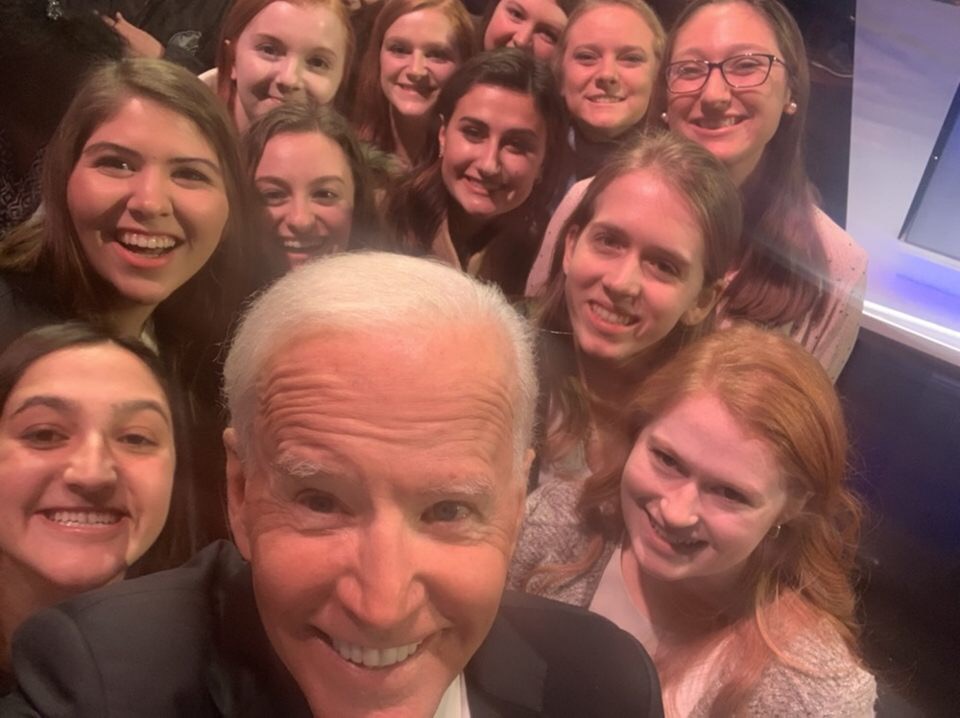
As I picked up my coat and prepared to leave, I was surprised to see candidates start walking into the crowd. First I saw Elizabeth Warren, who, in her true fashion, was rushing to get a picture with each and every person. Biden was similar, but he took the time to take a selfie with our class.
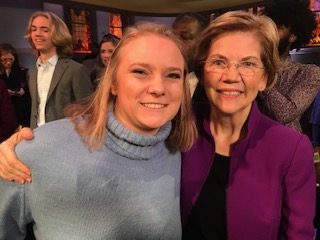
The biggest, and (for me) the best surprise was how willing both Pete and Chasten Buttigieg were to stop and talk. First, I saw Pete, and after telling him I was working on his campaign, he responded with extreme gratitude. I personally thanked him for bringing the conversation of the “religious left” and mental health into the spotlight, two things I am extremely passionate about. After about a full minute of conversation, he agreed to take a picture with me. I told him I was shaking because he was “my hero” (yes, I told him that) and he said, “Why? It’s just me.”
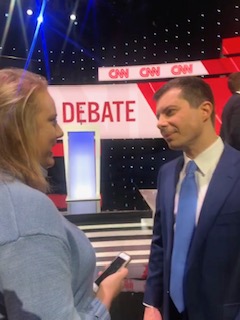
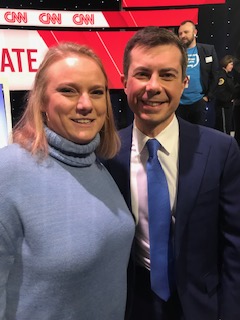
Chasten was just as kind, though he seemed slightly less comfortable being in the public eye. We talked about the campaign, and I thanked him for delivering an important message to the public. I also told him he was my hero. He agreed to take a picture too.
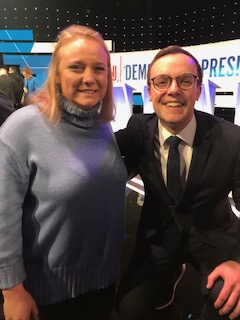
The conversations I had with Chasten and Pete humanized them so much, and I’m so grateful for that. Tomorrow, I’ll go back to Pete’s campaign office with a newfound understanding of who I am fighting for and why I am doing it. The work I do will be even more fulfilling, which I didn’t know was possible. My heart overflows with gratitude for what was the best day of my life.
 Elon University - Iowa: The Trail Starts Here